The Ultimate Guide to SSL Certificates: EV, OV, and DV Explained
A practical breakdown of certificate validation levels, so you choose the right level of trust for your specific site
Nexovah Staff
27d ago · 9 min read
Key Takeaways
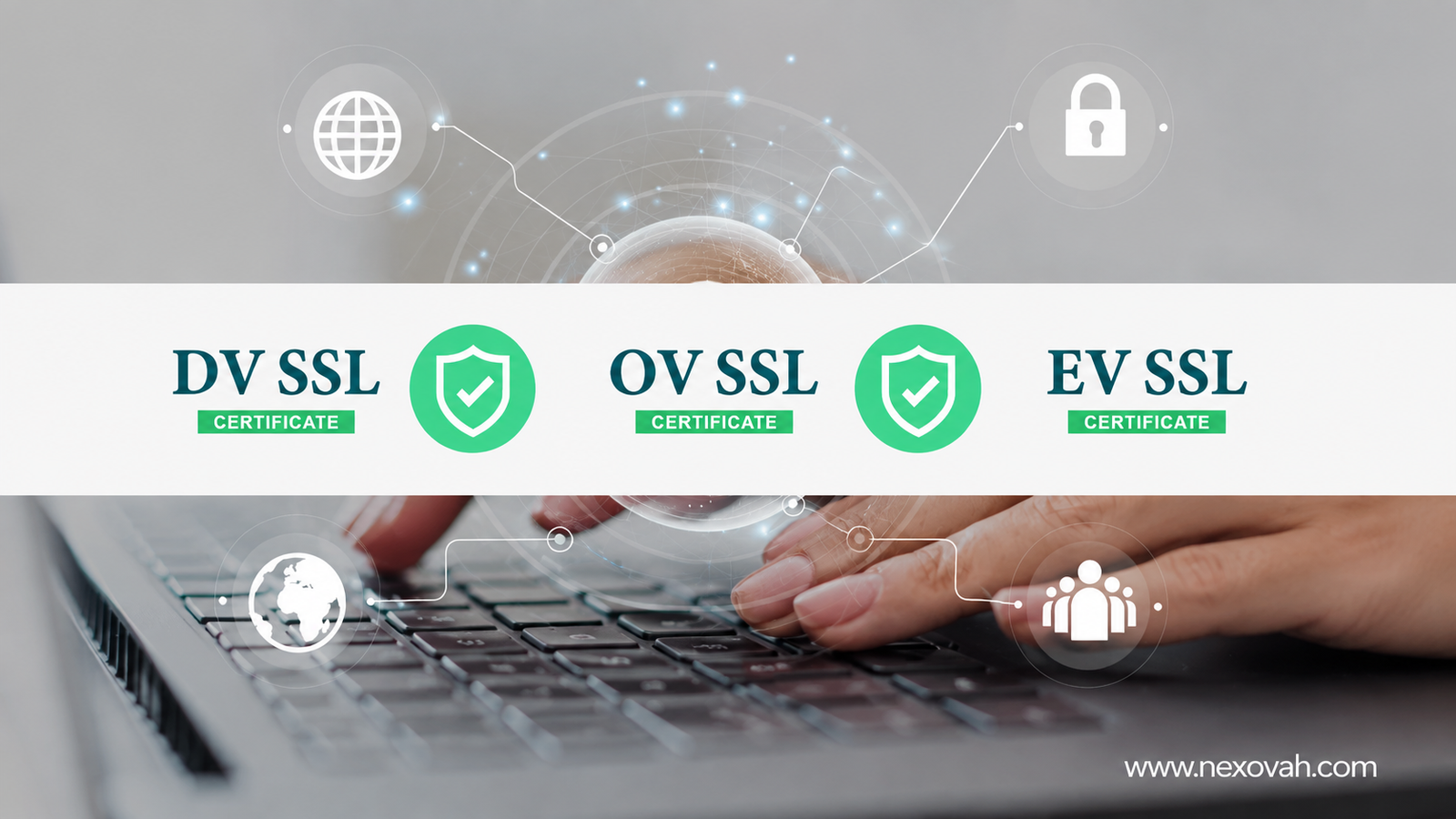
- EV (Extended Validation) certificates offer the highest level of trust, verifying an organization's legal and operational existence in full.
- OV (Organization Validation) certificates verify identity at a medium level, displaying verified details in the certificate itself.
- DV (Domain Validation) certificates only confirm domain ownership — fast and affordable, but with no organizational authentication.
- Single Domain, Wildcard, and Multi-Domain certificate types determine how many domains or subdomains a single certificate secures.
- Choosing the right SSL type depends on your website's purpose, data sensitivity, and how much visible trust your audience needs to see.
Why SSL Certificate Type Actually Matters
SSL establishes the secure, encrypted connection between a visitor's browser and your website — but the type of certificate you choose determines how much verified trust that connection actually communicates.
EV (Extended Validation) — The Gold Standard
EV certificates involve a meticulous verification process confirming an organization's legal identity, physical location, and operational status. In return, the organization's name displays prominently in the browser alongside a security indicator — the strongest visible trust signal available.
OV (Organization Validation) — A Credible Middle Ground
OV certificates verify an organization's legal existence, physical address, and operational details — less extensive than EV, but still a genuine step above basic domain validation, with verified organization details visible in the certificate itself.
DV (Domain Validation) — Fast and Basic
DV certificates only confirm domain ownership — they do not authenticate the organization behind the site. They're fast, affordable, and appropriate for personal sites and blogs, but offer none of the visible organizational trust signals of EV or OV.
Single Domain, Wildcard, and Multi-Domain Certificates
| Type | Coverage |
|---|---|
| Single Domain | One specific domain or subdomain |
| Wildcard | A primary domain plus all its subdomains |
| Multi-Domain (SAN/MDC) | Multiple distinct domains and subdomains under one certificate |
How to Choose the Right Certificate
The right choice depends on your website's purpose, the sensitivity of data being transmitted, and your audience's expectations. An ecommerce site handling payments warrants OV or EV; a personal blog is typically well served by DV.
Maintaining SSL Security
Regular certificate renewal, strong and current encryption protocols, and periodic security audits are all essential to keeping SSL protection effective over time — a certificate is not a one-time setup.
Matching Certificate Trust to Business Need
EV certificates offer the highest trust and visible authentication, OV strikes a credible middle ground, and DV covers basic encryption for lower-stakes sites. Choosing correctly means matching certificate type to what your specific website and audience actually need.
FAQ
EV offers the highest validation, verifying an organization's full legal and operational identity. OV verifies organizational identity at a medium level. DV only confirms domain ownership with no organizational authentication.
Published in The Nexovah Blog
Written by Nexovah Staff