Mastering Design Thinking: 17 Tips for a Smarter, More Innovative Process
From studying theory to mastering software — a practical roadmap for designers at any stage
Nexovah Staff
27d ago · 9 min read
Key Takeaways
- Design thinking is built on empathy, ideation, prototyping, and iteration — principles that apply regardless of design discipline.
- Observation power and structured feedback loops are as important to design thinking as any software skill.
- Recreating existing designs is one of the fastest ways to internalize the decisions behind successful work.
- Platforms like Dribbble, Behance, and Pinterest are genuine research tools, not just inspiration scrolling.
- Software mastery (Figma, Adobe Creative Suite, Sketch) is what turns design thinking into shipped work.
Design Thinking Is a Trainable Skill
Design thinking is a structured approach to tackling complex problems and generating genuinely innovative solutions — and like any skill, it improves through deliberate practice, not talent alone. Here are 17 practical ways to sharpen it.
Building the Foundation
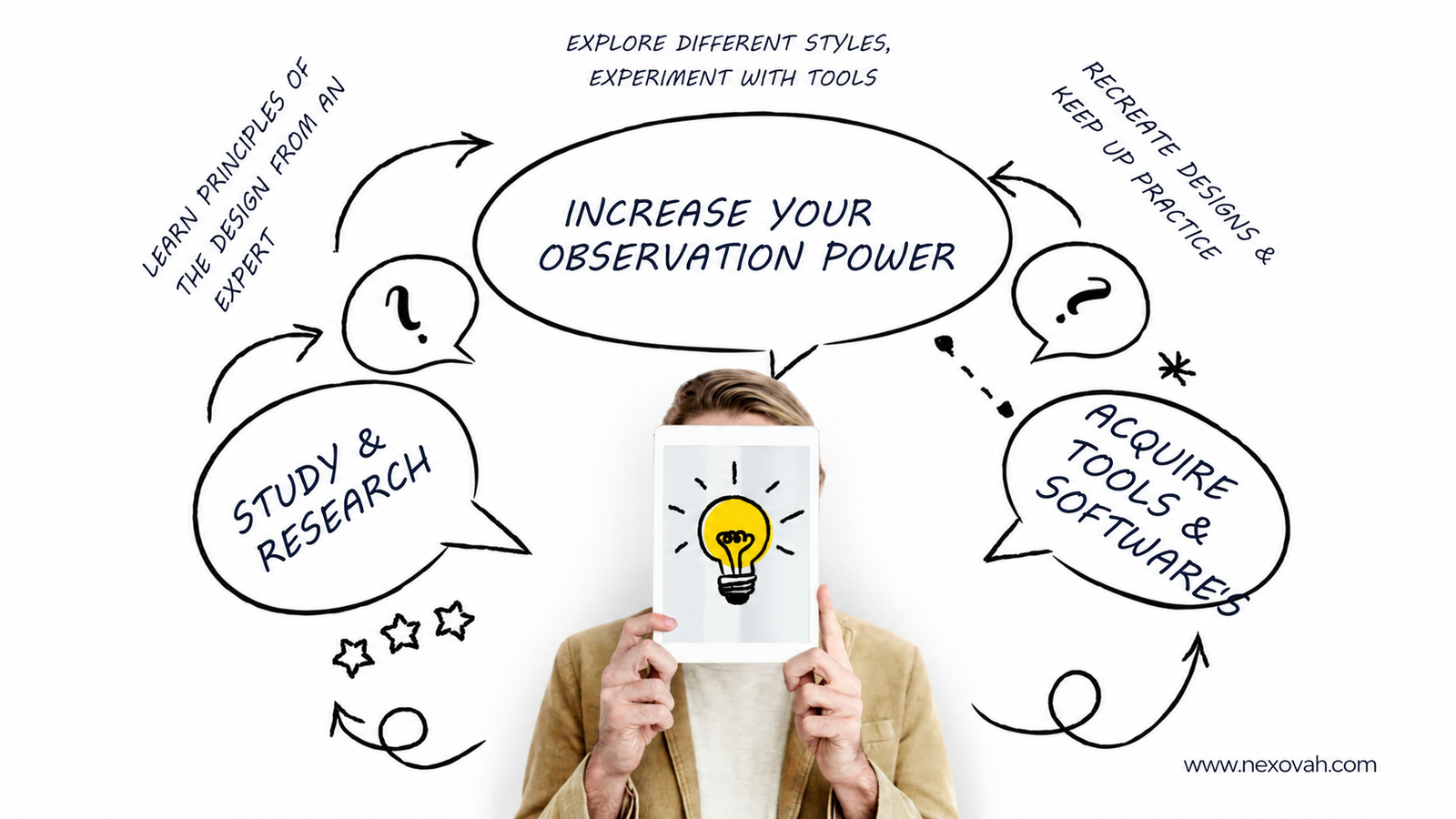
- Study the theoretical aspect — key concepts, methodologies, and frameworks give you a structure for approaching challenges
- Research trends — staying current across industries keeps your work relevant and fresh
- Learn from experts — mentorship, workshops, and design communities accelerate growth far faster than working in isolation
- Learn the core principles — empathy, ideation, prototyping, and iteration are the backbone of every design thinking process
Observation and Collaboration
- Increase your observation power — train yourself to notice detail, pattern, and human behavior in your surroundings
- Get help — brainstorm with colleagues, involve end-users, and seek feedback from fellow designers
- Collect feedback continuously — constructive criticism surfaces blind spots you can't see on your own
Practice and Experimentation
- Train yourself regularly — engage in design challenges and real-world problem-solving
- Explore different styles — minimalist, bold, experimental — to broaden your creative range
- Experiment with tools — prototyping software and collaboration platforms shape process, not just output
- Take on side hustles — passion projects and freelance work sharpen skills outside your regular constraints
Craft and Software Mastery
- Master relevant software — proficiency turns ideas into precise, shippable execution
- Keep up consistent practice — sketching and exploring new concepts regularly keeps skills sharp
- Recreate designs you admire — breaking down layout, typography, and interaction choices builds real insight into the thinking behind them
- Research well-designed websites — study what makes their UX and visual approach genuinely effective
Motivation and Mindset
Design thinking runs on a constant supply of inspiration and motivation — design blogs, influential designers, conferences, and galleries all keep the creative fire burning.
Strive for excellence, but embrace iteration — design thinking involves multiple rounds of refinement, and mistakes made along the way are part of the process, not a detour from it.
Where to Find Design Inspiration
- Dribbble — community showcase for exploring design styles and trends
- Behance — portfolios spanning a wide range of design disciplines
- Abduzeedo — curated design inspiration, tutorials, and resources
- CreativeBloq — comprehensive coverage across graphic, web, and typography design
- Pinterest — visual discovery for mood boards and cross-discipline trend spotting
The Software Toolkit for Design Thinking
| Tool | Best For |
|---|---|
| Adobe Creative Suite | Raster/vector graphics, photo editing, layout design |
| Sketch | UI/UX-focused vector design |
| Figma | Collaborative interface and prototype design |
| AutoCAD | Architecture, engineering, product design |
| Blender | 3D modeling, animation, visual effects |
Design Thinking as an Ongoing Practice
Mastering design thinking is a continuous, compounding process — not a one-time skill unlock. Applying these 17 tips consistently, with genuine curiosity and patience for iteration, is what builds a smarter, more innovative design roadmap over time.
FAQ
Empathy, ideation, prototyping, and iteration form the backbone of design thinking, guiding a user-centered and continuously refined approach to solving design challenges.
Published in The Nexovah Blog
Written by Nexovah Staff